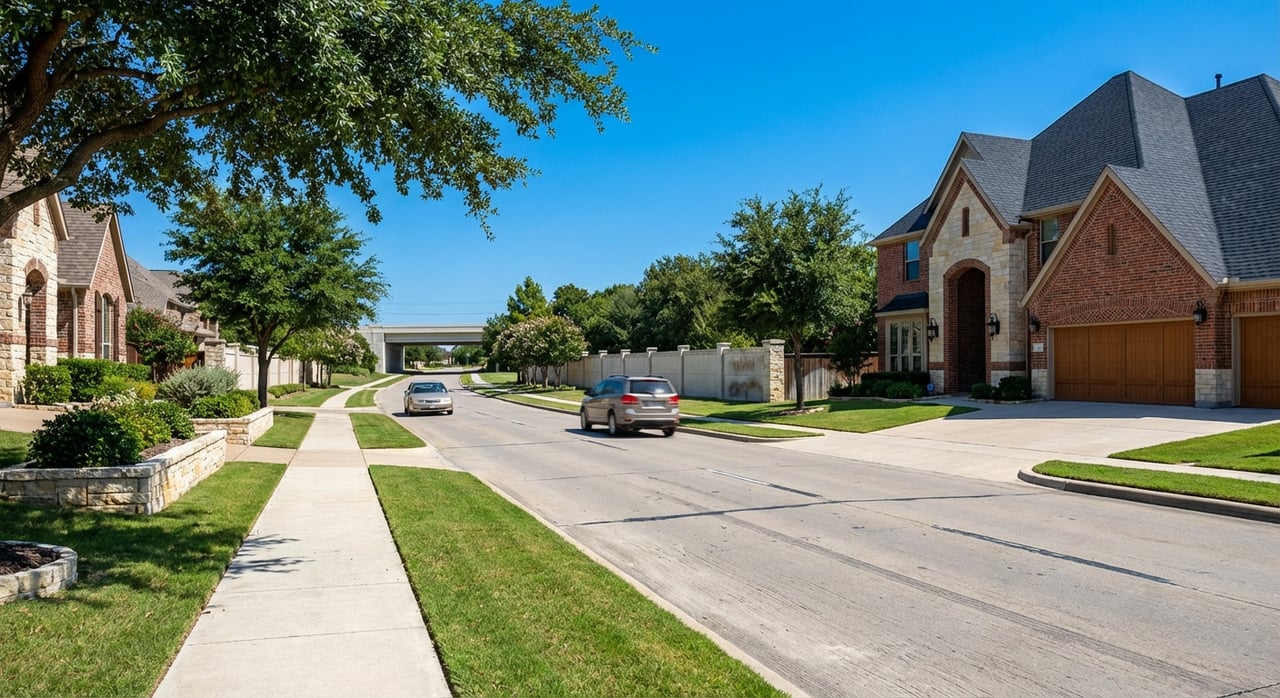
Thinking about living in Coppell but working in Plano, Frisco, Richardson, or Las Colinas? You’re not alone. Coppell’s central, airport-adjacent location draws professionals who want great suburban living without a punishing commute. In this guide, you’ll learn the key routes, when traffic is heaviest, how the new DART Silver Line changes your options, and what to test before you buy. Let’s dive in.
Why Coppell works for commuters
Coppell sits at the northwest edge of Dallas County, right by DFW Airport with high-capacity roads along its perimeter. The pattern is simple: no freeways cut through the city center, but you have quick access to SH-121, PGBT, and I-635 around the edges for flexible route choices. That setup makes it easy to pivot based on traffic and destination. For context, the local ACS 2019–2023 mean travel time to work is about 24.6 minutes, a helpful baseline if you are comparing suburbs. You can see Coppell’s location and size on the city’s overview and the commute average in federal data.
- See Coppell’s regional context: Coppell, Texas overview
- Commute baseline: ACS mean travel time 24.6 minutes
The key corridors from Coppell
SH-121 Sam Rayburn Tollway
SH-121, also known as the Sam Rayburn Tollway, is a primary east-west connector for reaching Plano and Frisco. From the north and west sides of Coppell, SH-121 feeds directly toward Legacy West and the DNT connectors. Many commuters choose the tolled mainlanes for more predictable travel on busy days. Learn more about the corridor’s role here: Sam Rayburn Tollway basics.
President George Bush Turnpike
PGBT creates a northern arc across Dallas County and is a go-to for suburb-to-suburb trips. It is useful when you are heading toward Irving, Richardson, or certain Plano addresses. Ramp locations and managed lane strategies affect reliability during peaks, so build a habit of checking live conditions before you go. TxDOT’s performance dashboard explains why managed lanes can stabilize travel times: TxDOT optimize system performance.
I-635 LBJ and TEXpress lanes
I-635 forms the southern edge of Coppell’s commute network and ties into I-35E for Downtown Dallas. The LBJ corridor includes TEXpress managed lanes that you can pay to use for more predictable arrival times. Expect slowdowns near major interchanges during weekday peaks on the free lanes.
DNT and US-75 connectors
To reach North Dallas, Plano, and Frisco, you will typically feed into the Dallas North Tollway or US-75 via SH-121 or PGBT. Your best path depends on where you start inside Coppell and your exact office location. Test both options during your likely commute window.
Hub-by-hub commute playbook
Downtown and Uptown Dallas
- Driving: Use I-635 to I-35E for core Downtown. For Uptown or the Preston corridor, PGBT to DNT or US-75 can be competitive. Route choice pivots on your final exit and current traffic.
- Transit: The DART Silver Line runs east-west and connects to light-rail lines that serve Downtown. If you prefer transit, factor in a short drive to a park-and-ride, then transfer to Downtown-bound rail.
- Reliability: Dallas ranks among high-congestion U.S. metros, with significant peak variability. Managed lanes can improve predictability, but always allow buffer time. Reference: INRIX U.S. traffic scorecard.
Plano and Legacy West
- Driving: SH-121 eastbound is your primary path, with connections to DNT for Legacy West and corporate campuses like Toyota’s HQ area. Many commuters stay on SH-121 most of the way.
- Transit: The DART Silver Line includes Plano stations, adding a practical park-and-ride rail option for some Coppell residents.
Frisco and The Star
- Driving: Reach Frisco via SH-121 and DNT. On game or concert days near The Star or Toyota Stadium, expect longer travel times and consider alternate surface routes.
- Transit: Frisco job sites are largely car-oriented. The Silver Line improves east-west rail choices nearby, but most Frisco offices are still drive-first.
Richardson, UT Dallas, and the Telecom Corridor
- Driving: PGBT to US-75 is the standard route into Richardson and the Telecom Corridor. It is direct and scalable for most work schedules.
- Transit: The Silver Line serves UT Dallas and CityLine/Bush, which can make a park-and-ride plus rail commute surprisingly reliable for offices within walking distance of stations.
Irving, Las Colinas, and DFW Airport
- Driving: Many Coppell addresses sit close to SH-114, SH-183, and I-635 for quick trips to Las Colinas and DFW. Airport runs are often short outside the busiest windows.
- Transit: The Silver Line directly serves DFW Airport Terminal B and the DFW North area, creating a new rail option for air travel and intermodal connections.
Transit is changing: what the Silver Line adds
The 26-mile DART Silver Line links Plano, Richardson, north Dallas, Carrollton, Cypress Waters, and DFW Airport Terminal B with park-and-ride access. It opened October 25, 2025, expanding non-driving options across several north-suburb hubs. See the launch details: DART Silver Line opening announcement.
What this means for you if you live in Coppell: you do not have a station inside city limits, but the nearby Cypress Waters station and other park-and-ride locations make rail a real option for certain commutes. If your job is near CityLine, UT Dallas, or central Plano stations, rail can rival driving on reliability, especially during peak periods.
- Line overview and stations: DART Silver Line
- Nearby access point: Cypress Waters station
Pro tip: Pair a short drive to a park-and-ride with on-demand first or last mile where available. Check current GoLink zones on DART’s site before you commit to a transit-based routine.
Timing, reliability, and toll strategy
Traffic in North DFW ebbs and flows. Morning peaks typically run about 6:30 to 9:30 AM and evening peaks about 4:00 to 7:00 PM. What matters most is not a single average, but how much your travel time swings day to day. Dallas appears among the more congested U.S. metros, and variability is common. Review the latest trends: INRIX U.S. traffic scorecard.
Toll and managed lanes exist to buy back predictability. SH-121, DNT, and TEXpress lanes on I-635 all trade a fee for steadier speeds. TxDOT’s performance materials discuss how managed lanes help stabilize operations: TxDOT optimize system performance. Before you set a long-term routine, compare sample toll costs at rush hour and decide what reliability is worth to you. Start here: SH-121 toll overview.
Day-to-day disruptors happen. Wrecks, construction, and major events can multiply travel times. That is why having at least two realistic routes or a rail fallback plan pays off.
Quick checklist when you house hunt in Coppell
Use this 10-minute checklist as you compare neighborhoods and floor plans:
- Identify your best two drive routes. Note which use SH-121, PGBT, I-635, DNT, or US-75 and whether they include tolled lanes like TEXpress or NTTA corridors. Reference: Sam Rayburn Tollway basics.
- Confirm transit within a 10 to 20 minute drive. Look for the nearest Silver Line station and park-and-ride capacity. Start with the DART Silver Line.
- Check first and last mile options. Ask your employer about shuttles or vanpools and verify GoLink zone coverage on DART’s site.
- Compare toll cost vs time. Price out your likely path during peak periods to see if the premium makes sense: SH-121 toll overview.
- Account for school and activity timing. If school pickups are part of your schedule, test routes near bell times to see how surface-street bottlenecks feel.
- Run live tests. Do a morning and evening trial on weekdays and one mid-day run. Use a traffic app to compare options, then choose your default route and a backup.
Example commute scenarios to consider
- If you work in Legacy West, plan on SH-121 east with a DNT connector as needed. Keep a surface-street alternative in mind for event days.
- If your office is near CityLine or UT Dallas, a short drive to a Silver Line park-and-ride may deliver a calmer, more reliable door-to-door routine.
- If you split time between Las Colinas and Downtown, combine I-635 for the Dallas days with a local arterial to SH-114 or SH-183 for Las Colinas. Use TEXpress when punctuality is critical.
- If you travel often, living near the south or west sides of Coppell can trim your airport runs. Silver Line service to Terminal B offers a rail option when that fits your schedule.
Ready to test-drive your commute?
You deserve a home that fits your day, not the other way around. When you tour with us, we will time showings around real commute windows, map park-and-ride options, and help you weigh route, toll, and transit tradeoffs before you make an offer. If you are moving within North DFW or relocating in, connect with Jeff Hahn to Make Your Best Move.
FAQs
What is the average commute time from Coppell?
- The ACS 2019–2023 mean travel time to work for Coppell is about 24.6 minutes, which is a helpful baseline rather than a promise for any single route.
Does Coppell have a DART rail station inside the city?
- No. Coppell is not a DART member city, but you can access the new Silver Line at nearby Cypress Waters and other park-and-ride stations, plus DFW Airport Terminal B.
Which roads matter most for commuting from Coppell to Plano or Frisco?
- SH-121 Sam Rayburn Tollway is the primary east-west connector into Plano and Frisco, with Dallas North Tollway and US-75 as the key north-south legs.
When are North DFW commute peaks the worst?
- Expect heaviest traffic about 6:30 to 9:30 AM and 4:00 to 7:00 PM on weekdays, with event days adding extra variability.
How does the DART Silver Line help if I work in Richardson or Plano?
- The Silver Line serves UT Dallas and CityLine in Richardson and multiple Plano stations, so a short drive to a park-and-ride can create a reliable rail-based commute for rail-adjacent offices.