A foundation note on an inspection report used to be a speed bump in Coppell. In 2026, it is a fork in the road. Same clay soil, same 1990s brick two-stories, same TREC contract. What changed is the market posture on the other side of the negotiation, and it changes what a seller should do before a buyer's inspector ever pulls into the driveway.
The one paragraph that reframes the rest of this post
Coppell's median home value sat at $627,929 as of Zillow's June 30, 2026 read, down 1.7% year over year, and Movoto's August 2026 snapshot shows median days on market at 36 with roughly 31% of active listings taking a price cut. Buyers know the numbers. They also know Coppell was largely built out during the 1980s and 1990s on expansive clay, which means a foundation observation is not a surprise, it is an expected line item they have already priced into their offer strategy. The seller who treats the option period as a defensive posture almost always pays more than the seller who answered the foundation question in writing before the listing went live. That is the whole post.
Why the option-period clock hits Coppell harder than most DFW suburbs
Two conditions stack here that do not stack the same way in Prosper or Celina. First, the housing stock. Coppell is fully built out, and neighborhoods like Lakewood Estates, Shadow Woods Estates, Pecan Hollow, Northlake Woodlands, and Riverchase Estates carry construction dates from the late 1980s through the early 2000s. Second, the soil. North Texas Vertisol clays swell when saturated and shrink when dry, and industry data cited by TK Realty puts measurable foundation movement across 20 to 40% of homes in these regions over a lifetime. Newer resale suburbs mask the issue with warranty-era construction. Coppell does not have that luxury, and neither do its sellers.
Buyers coordinate the option period accordingly. A DFW-savvy buyer will book the general inspection on day one, review it the next morning, deploy a foundation specialist by day three, and issue a repair proposal well before the 5:00 p.m. deadline on the negotiated seven to ten day window. That timeline is not a courtesy, it is a leverage instrument.
A TREC-licensed home inspector must note foundation deficiencies but cannot diagnose the cause of movement, determine severity, or certify structural integrity. Only a structural engineer licensed by TBPELS can do that. The distinction is where most Coppell deals either hold together or fall apart.
What your home inspector is actually allowed to say
Read a home inspector's foundation section carefully. Under the TREC Standards of Practice, the inspector performs a visual check and flags observable conditions. That is it. If the report says "recommend evaluation by a licensed structural engineer," the negotiation has now branched into two possible universes, and the seller does not control which one the buyer picks.
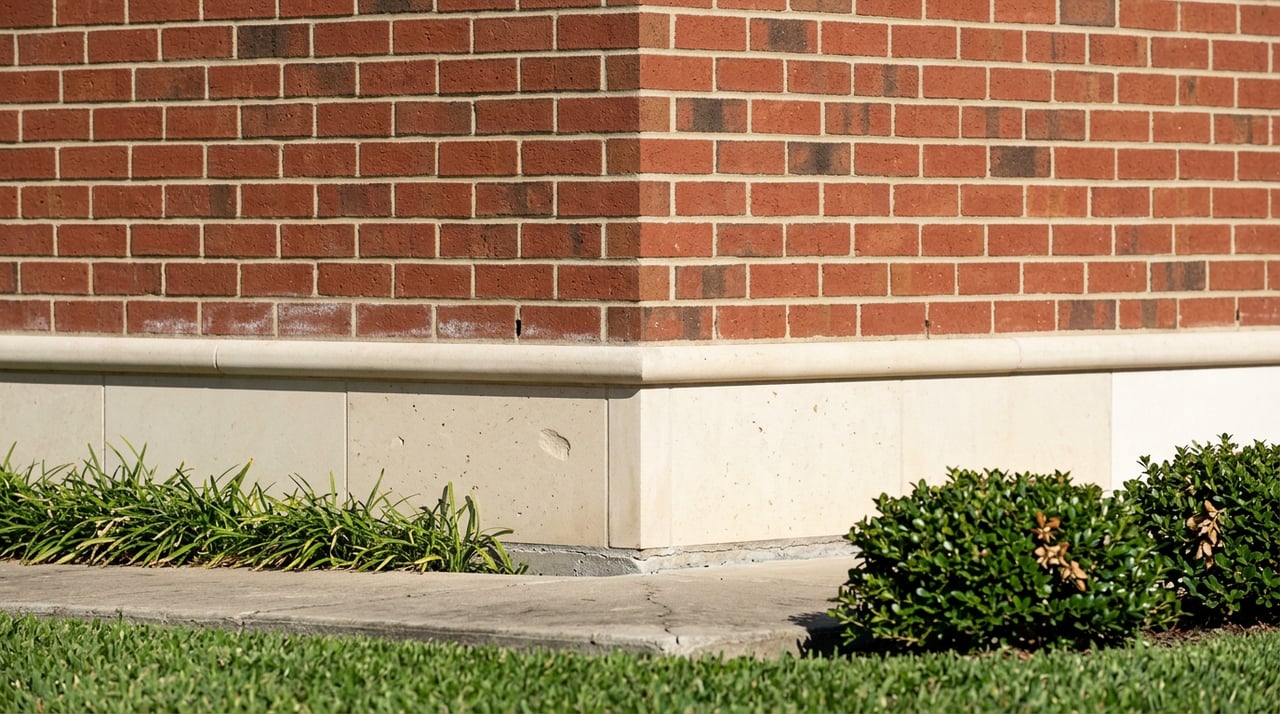
The exterior tells you which universe you are probably in before anyone opens a laptop. Visual signals every Coppell listing agent should walk before the sign goes up include:
- Stair-step cracks running through the mortar joints in the brick veneer
- Horizontal cracks in brick or block, which suggest lateral soil pressure and read more seriously than vertical stair-steps
- Visible gaps between the brick veneer and the slab, or between siding and grade
- Interior drywall cracks radiating from the top corners of doors and windows
- Doors and windows that stick, drag, or gap out of square
- Floors that feel sloped underfoot in a walkthrough
An engineer with a Zip Level Pro 2000 or equivalent laser system can map elevation differentials to a tenth of an inch across a whole slab. A repair company's in-house "assessor" can do the same measurements, but the inspection and the repair bid then live under the same roof. That is a conflict most Coppell buyer's agents will point out immediately.
The disclosure line that decides the negotiation
Texas Property Code §5.008 requires the seller of a previously occupied single-family home to deliver a written Seller's Disclosure Notice. Two versions circulate. The free TREC form (OP-H) asks about "Previous Structural or Roof Repair." The longer Texas REALTORS form used across NTREIS, TXR-1406, asks directly about "Previous Foundation Repairs" and about water penetration. That single checkbox is where sellers lose deals.
Marking "unknown" on something you actually know is not a loophole. It is the fact pattern that Texas courts have repeatedly used to void an as-is clause under the Prudential Insurance Co. of America v. Jefferson Associates line of cases, and the Deceptive Trade Practices Act allows for actual damages, and in egregious cases treble damages plus attorney's fees. The four-year DTPA clock runs from the buyer's date of discovery, not from closing, so the exposure follows a seller long after the wire hits.
The cleaner move is the opposite. Disclose the prior repair, attach the engineer's letter and the lifetime transferable warranty from the pier company, and let the buyer price a known quantity instead of an unknown one. Known quantities get financed. Unknown ones get renegotiated.
The 2026 repair-concession math
DFW brokerage data through mid-2026 shows the concession dynamic has shifted meaningfully. Orchard's rolling read on Coppell had a sale-to-list ratio of 98%, with 31.25% of listings taking at least one price drop and only 12.5% closing above ask, down eight points year over year. Grey Square's 2026 Dallas inspection guidance confirms sellers are agreeing to safety and structural requests far more often than in the 2021 to 2022 window.
Here is what the same foundation finding looks like across three seller postures on a hypothetical $650,000 Coppell listing:
| Seller posture | Buyer's likely ask | Typical outcome |
|---|---|---|
| No pre-listing inspection, foundation issue surfaces during option period | Full engineer's scope of repair plus contingency credit | $12,000 to $20,000 concession or termination |
| Prior repair, disclosed on TXR-1406 with engineer letter and warranty | Confirmation the warranty transfers | $0 to $2,500 credit for related cosmetic items |
| Pre-listing engineer report showing acceptable elevation variance, no repair | Buyer's engineer often defers to the existing report | $0 concession, deal holds price |
The interpretation matters more than the numbers. In a 2022 Coppell market with 10-day pending timelines and multiple offers, the top row still closed at or near list because the next buyer was already writing. In a 2026 market with 36-day median times and price cuts on nearly a third of listings, the top row is where the deal repriced or died.
The pre-listing move that changes the leverage
For Coppell sellers preparing a mid-to-upper price listing, the sequence that consistently produces the cleanest close looks like this:
- Order a pre-listing home inspection in the $300 to $500 range and sit with the report before pricing the home.
- If the report flags anything foundation-adjacent, engage a structural engineer licensed by TBPELS, not a repair company's free assessment. The engineer works for you, not for a repair contract.
- If repair is warranted, hire a company that offers a transferable lifetime warranty and keep the paid invoice, the engineered plan, and the post-repair elevation survey together in a single PDF.
- Complete the TXR-1406 with the specifics, attach the documentation package, and provide it to serious buyers before they write, not after they inspect.
- Price to current comparable sales, not to last summer's peak. Coppell buyers in this band do their own homework, and a defensible disclosure package supports the price better than a story about scarcity does.
The pattern behind the sequence is simple. Every question the seller answers in writing before the option period is a question the buyer's inspector cannot use to reopen the price. Every question left unanswered is a lever the buyer will pull, because the 2026 market has taught them they can.
FAQ
Does an as-is contract get me out of disclosing a prior foundation repair? No. Under §5.008, "as-is" limits repair obligations, not disclosure obligations. The known repair is a material fact regardless of how the contract is styled.
Does homeowners insurance cover foundation movement in Coppell? Generally no. Standard Texas policies exclude "earth movement," which includes settling and heave from expansive clay. A sudden plumbing leak under the slab that then damages the foundation is the narrow exception, and the underlying plumbing repair itself is usually not covered. Verify in writing with your carrier before assuming.
If the buyer's inspector calls for a structural engineer, do I have to pay? The TREC contract does not require it. The buyer can pay for their own engineer, or ask you to during option-period negotiation. In 2026 Coppell, offering to split or supply your own prior engineer's report often resolves the ask faster than debating who owes what.
Should we include the foundation warranty in the MLS listing? Discuss with your agent. Naming a transferable warranty and the year of the repair in the private remarks and the disclosure package is often more effective than putting it in public copy, because it lets buyer's agents raise it with clients on their terms rather than as a headline.
Coppell rewards sellers who treat the inspection question as marketing rather than defense. If you are preparing to list, or writing an offer on a resale where the foundation question is going to come up, The Hahn Team will walk the property with you before the sign goes in the yard and build the disclosure package that protects your price. Make Your Best Move.